
2026-08-27 ·
Gutter Replacement in Georgia: Signs Your Gutters Need to Be Replaced
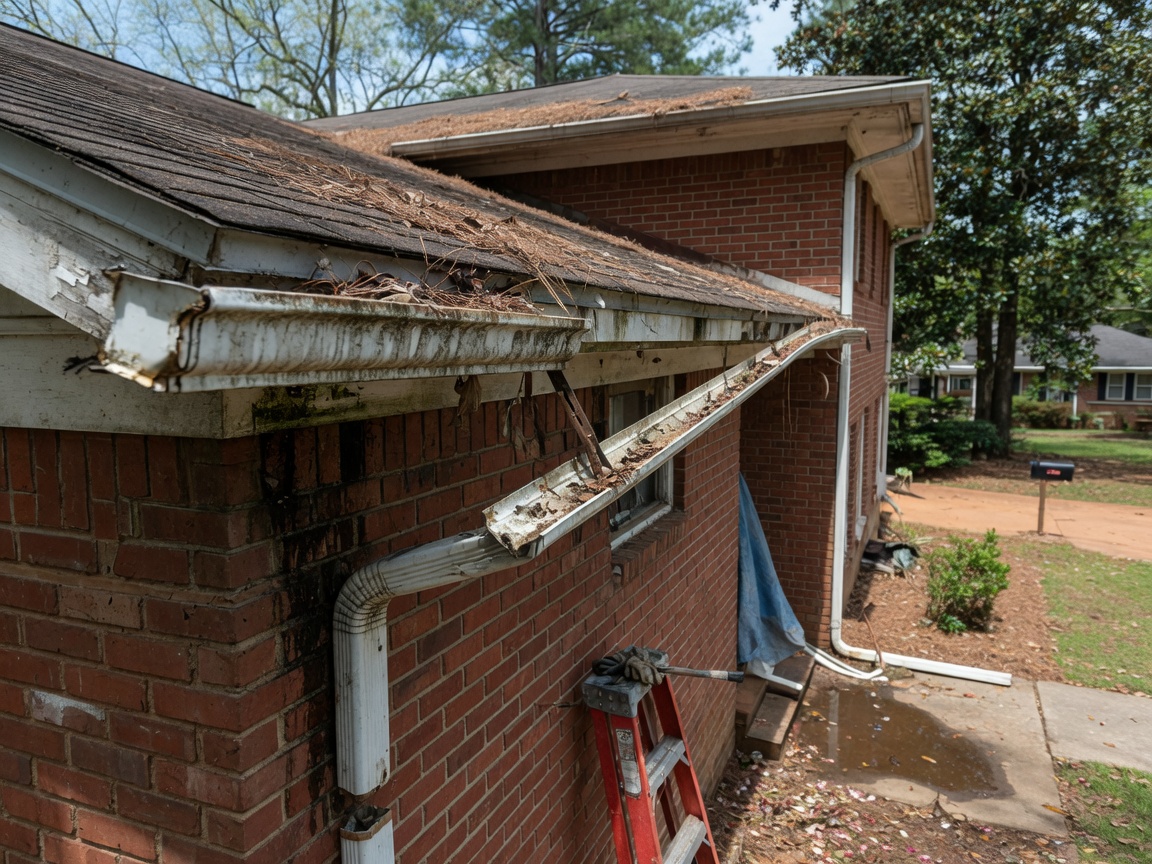
Gutters across Georgia homes typically show clear failure between 8–20 years depending on material, with Atlanta's hot summers, humidity, and leaf debris from areas like the Atlanta BeltLine speeding up the process. In Fulton County neighborhoods such as Inman Park and Grant Park, where many homes date to the early 1900s, original or aging aluminum systems often sag or leak after 12–15 years of exposure to heavy summer rains and mild winters that still allow constant moisture buildup.
Sagging or Separation from Fascia
Sagging sections appear first on longer runs common in Buckhead estates and East Atlanta bungalows where fascia boards have softened from repeated wetting. You will notice the front edge of the gutter pulling away by more than 1 inch or water spilling over the back during storms. In Virginia-Highland and Old Fourth Ward, mature oak and maple trees drop heavy loads of leaves that trap moisture against the metal, causing wood to rot and brackets to loosen. Once brackets fail, the entire run twists and directs water against siding rather than into downspouts. Homeowners who ignore this for one season often see water intrusion at second-story windows by the next heavy rain. Checking from the ground with binoculars after a downpour reveals whether the gutter still holds its original slope toward the outlets.
Rust, Holes, and Joint Failures
Rust develops fastest on galvanized steel and older aluminum in Fulton County's humid air, especially where seams were never sealed properly. Look for brown streaks running down the front face or pinholes along the bottom that allow water to drip steadily even after rain stops. In Sandy Springs and Decatur homes with copper or painted gutters, joint separation at corners creates the same effect once sealant dries out from summer heat. These openings let water reach the foundation during the frequent afternoon thunderstorms that hit Midtown and West End properties. Replacement becomes necessary once holes exceed the size of a pencil eraser or when more than two seams on a single run are leaking. Delaying allows interior wall damage that costs far more than new seamless gutters.
Overflow, Clogging, and Poor Drainage
Constant overflow during moderate rain signals that the system can no longer handle Atlanta's peak summer rainfall rates of 1–2 inches per hour. Clogs from pine needles and pollen common near Piedmont Park and Centennial Olympic Park reduce capacity and force water over the front lip. In Grant Park and surrounding areas, downspouts that empty too close to the house without extensions create the same visible sheet of water along the foundation. When cleaning no longer restores proper flow, the original sizing or pitch is usually the problem. Gutter Cleaning can extend life temporarily, but repeated clogs after proper maintenance point to replacement with larger 5-inch or 6-inch profiles.
Foundation and Siding Damage
Water staining on brick or siding below the gutter line, or soil erosion next to the foundation, shows the system has already failed to protect the structure. In older Fulton County homes near the Atlanta BeltLine, repeated overflow has undermined porches and created settling cracks within two seasons. Gutter Downspout Extensions help when the only issue is discharge location, yet they cannot fix a gutter that is itself rusted through or sagging. Visible mold on exterior walls or musty odors in crawl spaces after storms confirm that replacement should happen before interior repairs become necessary.
Lifespan by Material in Georgia Conditions
Aluminum seamless gutters installed in the 1990s around Mercedes-Benz Stadium and Georgia Aquarium now reach the end of reliable service in many blocks. Steel systems rarely exceed 15 years here because of humidity-driven corrosion, while properly maintained copper can last 30–50 years. When homeowners in South Fulton or Decatur notice multiple signs together—sagging plus rust plus overflow—replacement with seamless aluminum or aluminum rain gutters restores proper drainage without repeated patching. The decision hinges on counting visible defects rather than waiting for a single dramatic failure during a summer storm.