
2026-08-27 ·
Gutter Downspout Extensions: Preventing Foundation Problems in Georgia
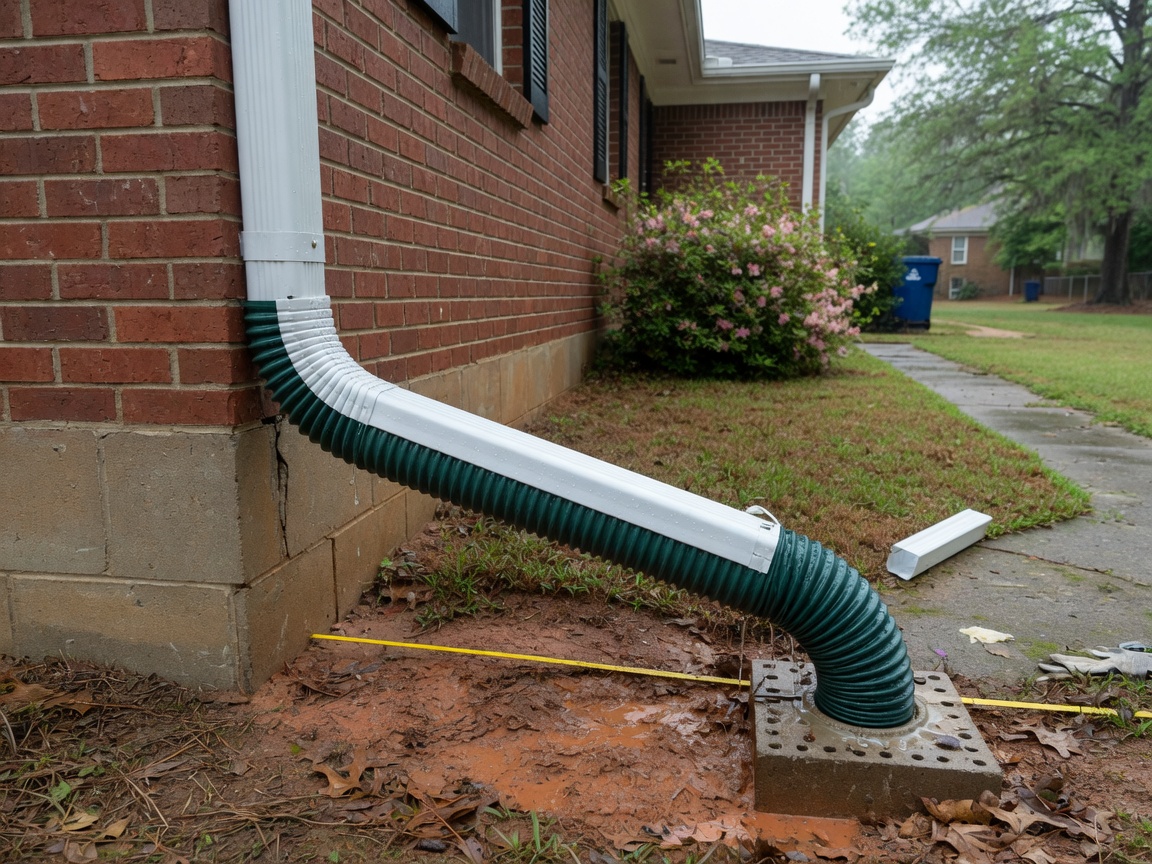
Downspout extensions that carry water at least 5–10 feet from the house reduce foundation saturation in Atlanta homes by moving roof runoff past the drip line where clay soils hold moisture longest. In Fulton County neighborhoods such as Buckhead and Midtown, older brick and pier-and-beam houses sit on shallow footings that crack when water pools within 3 feet of the wall during summer thunderstorms. Mild winters keep the ground from freezing solid, so repeated wetting and drying cycles widen those cracks faster than in colder climates.
How Atlanta's Climate and Soil Affect Foundation Drainage
Fulton County receives frequent downpours in the humid subtropical pattern, with hot summers delivering 4–6 inches of rain in single events that overwhelm standard 2x3 downspouts. Clay-heavy soils around Virginia-Highland and Inman Park expand when wet and shrink when dry, exerting pressure on foundations that already sit close to grade. Homes near the Atlanta BeltLine or Piedmont Park often have grading that slopes back toward the structure after decades of settling, so water from a 6-inch gutter flows straight to the basement wall within minutes. Extensions that terminate on splash blocks or buried French drains interrupt this path before the water reaches the footing. Without them, repeated cycles in East Atlanta and Grant Park produce efflorescence on brick and hairline cracks that widen to 1/4 inch within five years.
Signs Your Downspouts Need Extensions in Fulton County
Standing water within 4 feet of the foundation after rain signals the need for longer discharge in neighborhoods like Old Fourth Ward and West End. Interior signs include musty odors in crawl spaces and hairline cracks above windows on the downhill side of the lot. In Decatur and Sandy Springs, where many 1950s–1970s ranch houses have gutters that empty directly onto driveways, extensions prevent water from undermining the garage slab edge. Check after each storm: if soil remains soft or mulch washes away within 3 feet of the wall, the current downspout length is insufficient for local rainfall intensity.
Installation Steps That Work in Atlanta Terrain
Measure from the existing elbow to a point 5–10 feet from the foundation, accounting for any slope that carries water back toward the house in hilly sections of Buckhead. Use 3x4 or 4x5 extensions on larger roofs common in Grant Park to handle the volume without overflow. Secure joints with screws and seal with exterior caulk rated for Georgia's temperature swings. Route the line around driveways or patios by adding 45-degree elbows rather than sharp turns that trap debris. For properties along the Atlanta BeltLine trail, bury the final 3 feet in a perforated pipe bedded in gravel so discharge does not erode shared green space. These steps keep water moving until it reaches permeable soil or a drainage swale.
Long-Term Protection and Related Services
Extensions paired with proper gutter sizing extend foundation life by 15–20 years in Fulton County by limiting hydrostatic pressure against the wall. Homeowners in Midtown and Virginia-Highland often combine them with Rain Gutter Extensions sized for their roof pitch and Gutter Downspout upgrades that increase capacity on two-story homes. For readers comparing options, the guide Gutter Extenders: How They Prevent Water Damage Around Georgia Homes details material choices that resist Atlanta's UV and pollen load. Regular checks each spring and fall maintain performance through the region's mild winters and intense summer storms.