
2026-08-27 ·
Gutter Downspouts in Georgia: Sizes, Types, and Proper Placement
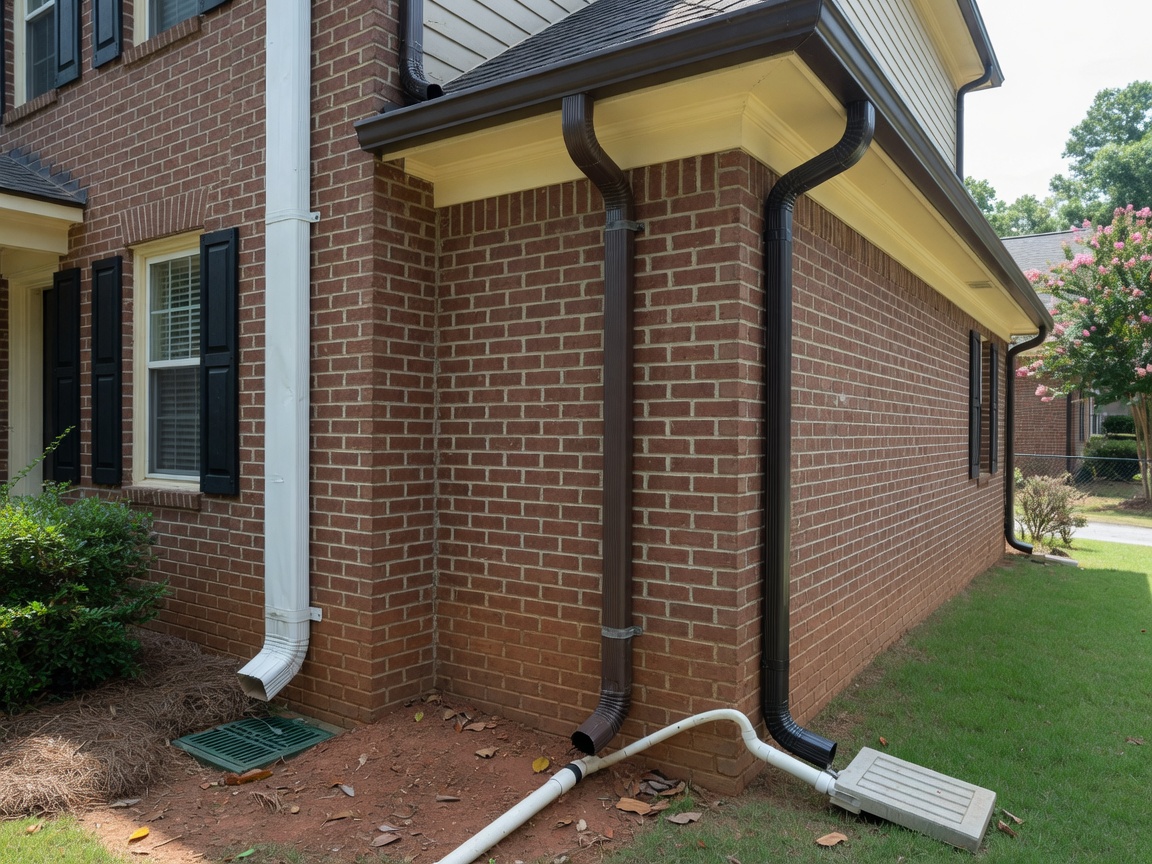
In Georgia homes, downspouts typically measure 2x3 inches for standard residential flows or 3x4 inches where larger roof surfaces and intense summer storms deliver higher volumes, with proper placement directing water at least 5 feet from foundations in Fulton County properties.
Standard Downspout Sizes for Atlanta Homes
Atlanta's housing stock in areas such as Virginia-Highland and Inman Park often features older roofs that collect substantial runoff during humid subtropical downpours. A 2x3 inch downspout handles moderate flows from smaller homes effectively, while 3x4 inch versions manage the heavier loads common near Piedmont Park and the Atlanta BeltLine. Homeowners in East Atlanta and Grant Park frequently upgrade to the larger size after observing overflow during peak summer rains. Placement starts at each gutter corner or low point, with extensions ensuring discharge avoids crawl spaces common in West End bungalows. These dimensions prevent backups that can push water under siding during mild winter rains that still saturate Fulton County soil.
Types of Downspouts Suitable for Local Conditions
Round and rectangular profiles both appear on Atlanta roofs, yet rectangular 3x4 inch aluminum units resist denting from falling branches near Centennial Olympic Park better than round styles. Copper options add durability in historic districts like Old Fourth Ward where aesthetic match matters. Gutter Downspout work in Sandy Springs and Decatur often pairs these with extensions to handle the transition from hot summers to occasional freezes. Material choice affects expansion rates in Georgia's climate, so seamless connections reduce leaks at joints. Local operators note that vinyl types flex more during temperature swings but fade faster under intense sun exposure common across Buckhead.
Proper Placement for Effective Drainage
Position downspouts every 20 to 30 feet along gutters to match roof pitch and square footage in Midtown high-rises converted to residences. Aim discharge toward sloped yards or French drains rather than flat driveways near Mercedes-Benz Stadium traffic patterns. In neighborhoods like Grant Park, terrain slopes toward streets, so extensions route water to permeable surfaces instead of neighbors' lots. How Georgia Weather Affects Gutter Installation and Performance details how summer humidity accelerates corrosion at connection points if placement allows standing water. Avoid proximity to HVAC units or walkways to prevent splash-back onto foundations during frequent afternoon storms.
Adjusting for Fulton County Terrain and Weather
Fulton County's red clay soils retain moisture, so downspout outlets must clear at least 5 feet to reduce hydrostatic pressure against basements in Inman Park. Hot summers increase evaporation yet leave debris that clogs smaller 2x3 inch pipes faster near tree-lined streets in Virginia-Highland. Mild winters bring freeze-thaw cycles that crack rigid joints if not properly sloped. Common Gutter Problems Georgia Homeowners Should Watch For outlines ice dam risks even in Atlanta's climate. Operators serving West End and East Atlanta check slope with levels on every install to maintain 1/4 inch drop per foot toward the outlet.
Maintenance Practices That Protect Downspout Performance
Inspect connections twice yearly before and after peak storm seasons to clear leaves that accumulate in Old Fourth Ward gutters. Extend downspouts during heavy rain events common near the Georgia Aquarium district to test flow capacity. Pairing with Gutter Guards Installation reduces debris entry that narrows effective diameter inside 3x4 inch pipes. Homeowners in Sandy Springs report fewer foundation issues when outlets remain unobstructed through summer humidity and winter rains. Regular checks preserve the 20 to 30 foot spacing that prevents overflow on larger Fulton County roofs.