
2026-08-27 ·
Gutter Extenders: How They Prevent Water Damage Around Georgia Homes
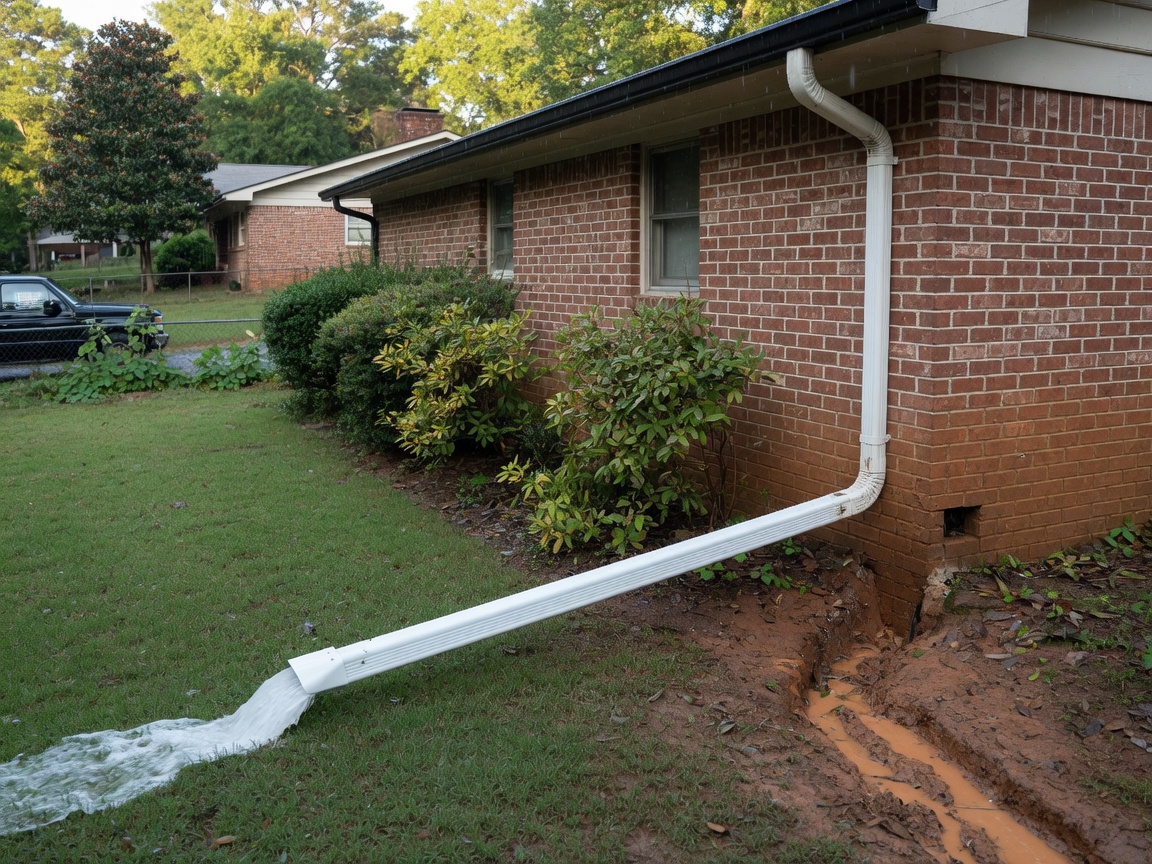
Gutter extenders prevent water damage by extending downspout discharge 5–10 feet away from the house, moving runoff past the foundation and into areas where soil can absorb it without creating hydrostatic pressure. In Fulton County this distance matters because many homes sit on clay-heavy soils that hold moisture and expand during the frequent summer thunderstorms common to Atlanta's humid subtropical climate.
Why Atlanta Foundations Face Extra Pressure from Runoff
Older homes in Inman Park, Virginia-Highland, and Grant Park often rest on shallow footings or crawl spaces that were never designed for the volume of rain Atlanta receives. When downspouts empty within a few feet of the wall, water saturates the backfill and pushes against brick or block foundations. Over repeated wet seasons this leads to cracking mortar, efflorescence, and musty crawl spaces. Extending the outlet moves the water load farther out, where the ground slopes naturally toward streets or the Atlanta BeltLine greenways.
Buckhead and Midtown properties on steeper lots see the same problem in reverse: fast-moving water can undercut driveways or pool against lower-level patios. A simple 6-foot rigid or flexible extender changes the exit point enough to let the water follow the existing grade instead of ponding. Homeowners in Sandy Springs and Decatur report fewer springtime moisture calls once extenders are added to existing downspouts.
How Extenders Interact with Local Terrain and Soil
Fulton's red clay expands when wet and contracts when dry, creating movement that already stresses foundations. Adding 40–60 inches of extra pipe length gives the water time to slow before it reaches the soil near the house. On flat lots in East Atlanta and the Old Fourth Ward, this prevents the shallow puddles that breed mosquitoes and stain siding. On the rolling terrain near Piedmont Park, extenders can be angled to follow natural swales so water continues downhill instead of collecting against retaining walls.
Mild winters mean the ground rarely freezes, so flexible extenders stay in place year-round without heaving. Hot summers, however, increase evaporation and can dry out the soil right next to the foundation if water is not directed outward; the result is uneven settlement. Placing the discharge beyond the drip line of mature trees also reduces the chance of root rot in the planting beds common around West End bungalows.
Practical Steps for Installing Extenders on Georgia Homes
Measure the existing downspout and choose rigid PVC or corrugated pipe sized to match. Aim for a minimum 5-foot run on most Atlanta lots; 8–10 feet works better on properties with heavy clay or poor drainage. Secure the connection with a screw clamp and add a splash block or pop-up emitter at the end so the water does not erode mulch beds. In neighborhoods with underground utilities, keep the run above grade and visible for future maintenance.
Link the extender to a Gutter Extender system when replacing sections of downspout. Pairing it with Rain Gutter Extensions allows the same pipe to serve multiple downspouts on larger homes. Check the route after the first heavy rain to confirm water is not flowing back toward the foundation or across sidewalks.
Keeping Extenders Working Through Atlanta Seasons
Inspect the connection points twice a year, once after the last spring pollen event and again before winter rains. Clear any debris that collects at the elbow where the extender meets the downspout. In Grant Park and Candler Park, falling leaves from mature oaks can clog the joint if the slope is too flat; a slight downward pitch prevents backup. Homeowners who also maintain Gutter Guards Installation notice fewer clogs at the extender inlet because less material reaches the downspout in the first place.