
2026-08-27 ·
Rain Gutter Extensions: How to Direct Water Away From Your Georgia Home
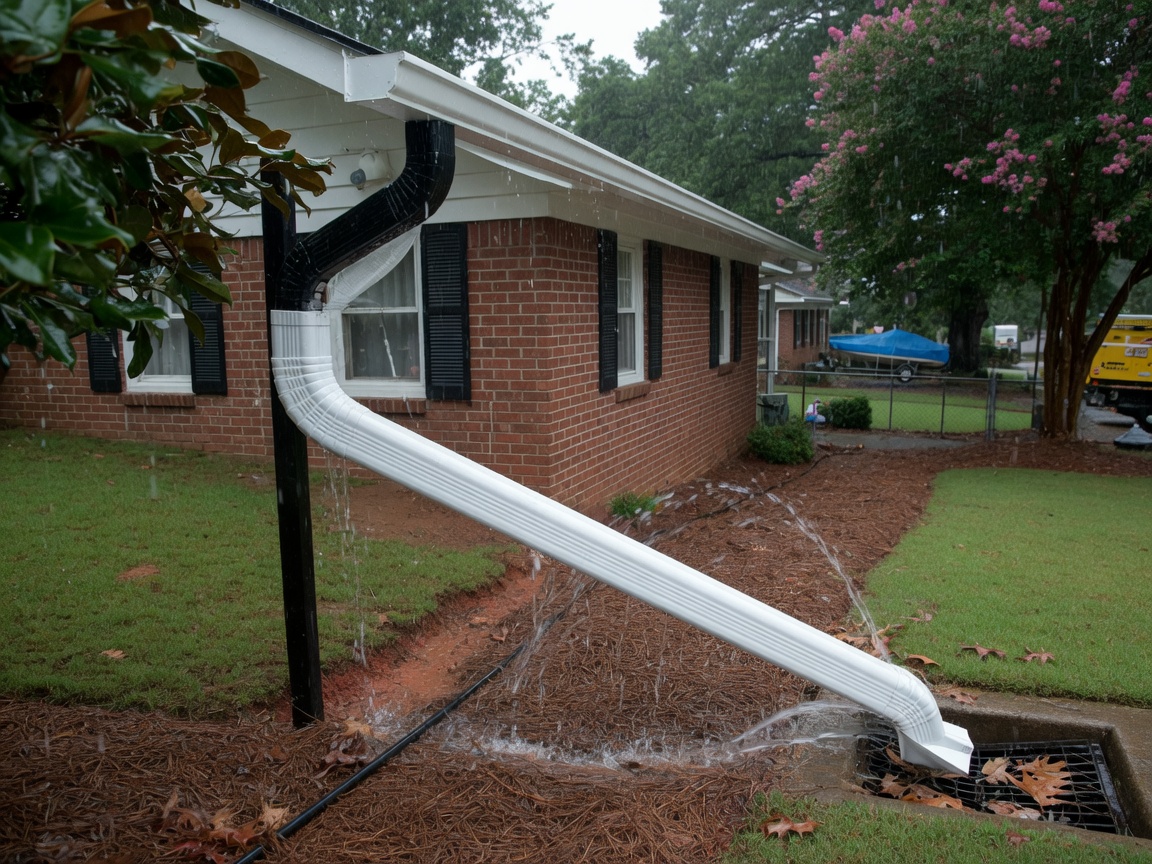
Rain gutter extensions direct water 5–10 feet from your foundation when installed with a consistent downward slope of at least 1 inch per 10 feet. This distance keeps roof runoff from pooling against siding or footings in Fulton County homes where clay-heavy soils hold moisture longer after storms.
Why Extensions Matter in Atlanta's Humid Subtropical Climate
Atlanta receives frequent downpours during hot summers that can drop several inches of rain in a single afternoon. Without extensions, water collects near crawl spaces and basements in older stock found in Inman Park, Grant Park and Old Fourth Ward. Mild winters allow repeated freeze-thaw cycles that widen small cracks when soil stays saturated. Homes near the Atlanta BeltLine often sit on sloped lots where runoff accelerates erosion if downspouts empty too close to the structure. Adding extensions moves discharge onto grass or toward street drains before it reaches the foundation.
Selecting Length and Material for Local Conditions
Choose extensions that reach at least 5 feet on flat lots and 8–10 feet on the rolling terrain common in Buckhead and Virginia-Highland. Aluminum or vinyl sections resist the constant humidity while matching existing gutters. In East Atlanta and West End, where many homes date to the early 1900s, longer extensions help carry water past mature tree roots that otherwise trap moisture. Pair extensions with rain gutter extensions sized to your downspout diameter so flow does not back up during peak summer storms.
Step-by-Step Placement Around Piedmont Park and Midtown Homes
Measure from the downspout outlet to a point where water will drain toward the street or a swale. Dig a shallow trench if needed so the extension sits level with grade and does not create a tripping hazard. Secure the connection with screws rated for outdoor use and test flow with a garden hose before the next heavy rain. Residents in Midtown and near Centennial Olympic Park often route extensions toward side yards to avoid sidewalks. For homes in Decatur, angle the pipe so discharge clears the drip line of foundation plantings that stay wet in the subtropical humidity.
Common Problems Solved in Sandy Springs and Decatur
Many Fulton County properties experience water stains on foundation walls when downspouts empty within 3 feet of the house. Extensions eliminate this by carrying flow to permeable areas. In Sandy Springs neighborhoods with newer construction, buried extensions connect to French drains that handle the volume from large roof surfaces. Older homes in Virginia-Highland benefit from above-ground extensions that homeowners can inspect each season. Check how to prepare your gutters for Georgia's heavy rain and storms for seasonal maintenance that keeps extensions clear.
Maintenance Tips for Year-Round Performance
Inspect extensions monthly during summer when pollen and leaves accumulate quickly. Remove debris at the connection point so water continues to exit 5–10 feet away. In mild winters, confirm that extensions have not shifted from foot traffic or lawn equipment. Homeowners near Piedmont Park often clear extensions after major events at Mercedes-Benz Stadium when extra foot traffic increases nearby debris. Consistent checks prevent the need for gutter extender replacements every 8–12 years.