
2026-08-27 ·
How to Choose the Right Gutter Size for a Georgia Home
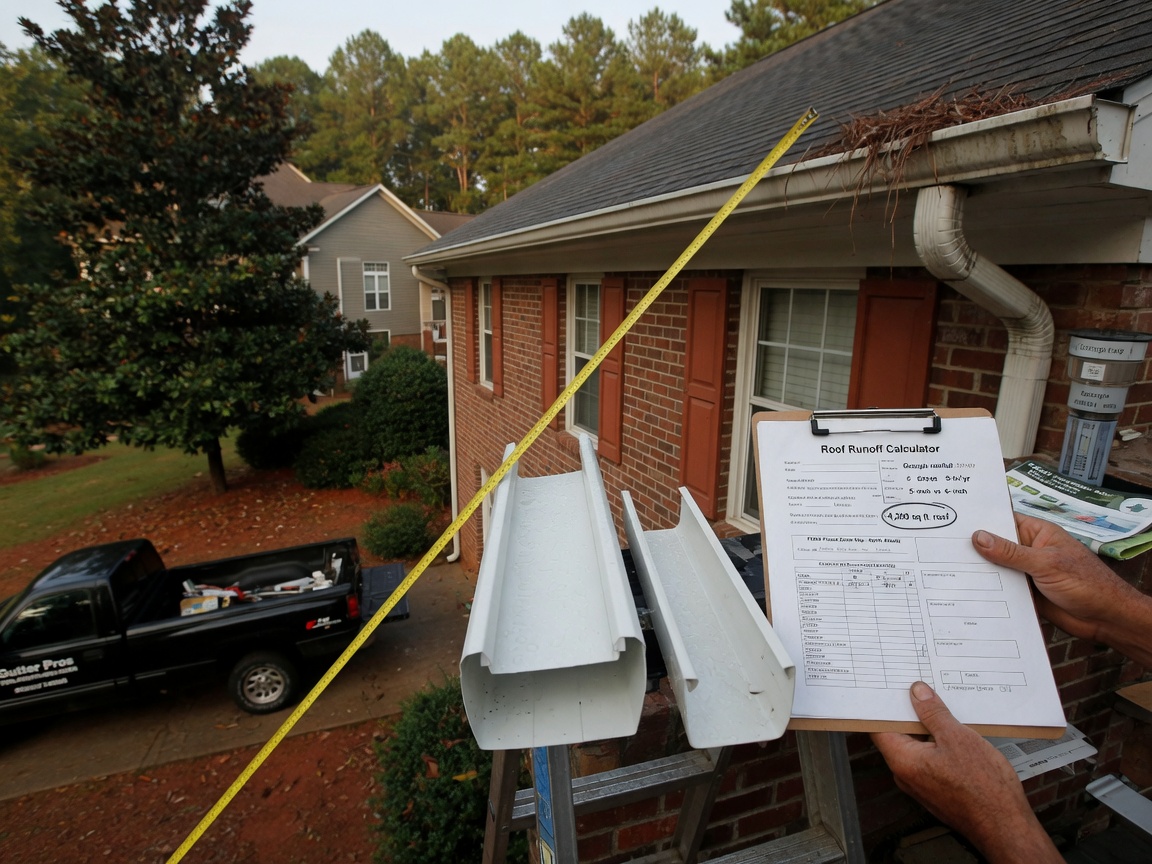
Most homes across Fulton County, including those in Midtown and Buckhead, perform best with 5-inch or 6-inch K-style gutters. These sizes manage the 40–50 inches of annual rainfall without overflow on typical 1,500–3,000 square foot roofs when pitch stays under 6:12.
Matching Gutter Size to Roof Area and Pitch
Atlanta homes built before 1980 in Virginia-Highland and Inman Park often feature steeper roofs that shed water faster during thunderstorms. Calculate catchment area by multiplying roof length by width, then add 10 percent for overhangs. A 2,000-square-foot roof with moderate pitch usually needs 6-inch gutters to keep flow under 6 gallons per minute per downspout. Larger Grant Park Victorians with complex valleys push the requirement to 6-inch sections paired with 3-by-4-inch downspouts. Undersized 5-inch gutters on these properties cause splash-back onto brick foundations during the intense June through August storms.
Accounting for Local Rainfall Patterns
Fulton County receives its heaviest rain in short, high-intensity bursts rather than steady drizzle. A single summer cell can drop 2 inches in 30 minutes, exceeding the capacity of 5-inch gutters on any roof over 1,800 square feet. Homeowners in East Atlanta and Old Fourth Ward routinely upgrade to 6-inch profiles after repeated fascia staining. The mild winters reduce ice-dam concerns, yet the same 6-inch size still handles leaf debris better when paired with guards. Sandy Springs properties on rolling terrain see additional sheet flow from upslope lots, making the larger profile the safer default.
Terrain and Soil Effects on Drainage
Red clay soils throughout the metro area slow ground absorption, so gutters must carry water farther from foundations. West End and West End bungalows on flat lots benefit from 6-inch gutters feeding into 10-foot extensions. Sloped lots in the Old Fourth Ward allow shorter runs but still require the larger profile to prevent backup at elbows. Installing 5-inch gutters on these sites often leads to soil erosion along the drip line within two seasons.
When to Step Up to 6-Inch or Larger
Roofs exceeding 3,000 square feet or those with multiple valleys in Piedmont Park-adjacent neighborhoods almost always need 6-inch gutters. Adding a second story or solar panels increases runoff volume, pushing the same home past the limit of 5-inch sections. Seamless aluminum systems in 6-inch size maintain flow rates 30 percent higher than 5-inch equivalents while resisting the expansion cycles common in Atlanta's temperature swings. Homeowners considering upgrades can review full installation details on the Gutter Installation page or compare costs in the guide Gutter Installation in Georgia: Costs, Types, and What to Expect.
Practical Steps for Atlanta Homeowners
Measure each roof plane separately and note downspout locations before ordering. Walk the property after a heavy rain to spot current overflow points. In Decatur bungalows, many owners add a 6-inch section only on the rear elevation where the largest roof area drains. Pairing the correct size with Micro Mesh Gutter Guards reduces cleaning frequency while preserving full capacity. Peachway Gutters operates Mon–Sat 7am–10pm and Sun 7am–9pm to schedule on-site measurements across these neighborhoods.